+33 4 96 11 60 00


ITER
WE PROVIDE AUTOMATED REMOTE CONTROLLED SYSTEMS FOR ITER. AIX-EN-PROVENCE WAS A NATURAL CHOICE FOR OUR LOCATION AS IT PUTS US CLOSE TO BOTH EXISTING AND POTENTIAL CUSTOMERS.
An Inexhaustible Source of New Energy, a Pioneering Global Collaboration
Fusion is the nuclear reaction that powers the sun and the stars. It is also a potential source of limitless, reliable, and environmentally friendly energy. ITER is an international project to harness the power of fusion energy. It is an essential step between the fusion experiments of the past and the mainstream fusion reactors that will provide the energy of the future.
The ITER project features seven partners—the European Union, China, India, Japan, Korea, Russia, and the United States—that are working together in Provence as part of an unprecedented global initiative to solve the world’s energy problems.
The construction of the world’s largest nuclear fusion research center in Provence represents countless business opportunities with much of the work being put out to public tender. Every year, more than 100 subcontractor, services, or parts contracts are signed as part of the ongoing work at the ITER site.
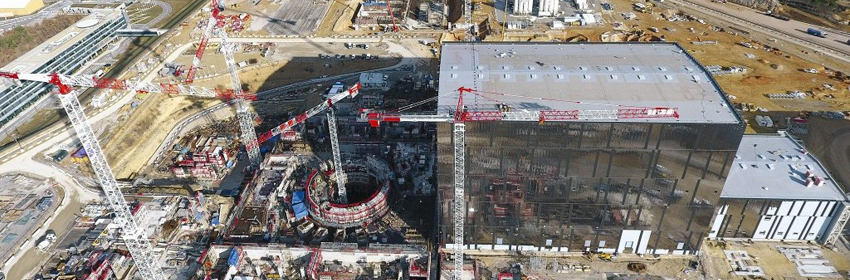
By the time the project is done, ITER will bring together more than 1000 researchers, engineers, and technicians specialized in fusion, plasma, or cryogenics (study of materials at very low temperatures), not to mention other service areas such as IT, project management, electronics…
The Magnitude Project in Numbers
- 35 partner countries;
- 15 billion euros in investment over 45 years;
- 3250 direct or indirect jobs in France, including in the PACA region;
- 180-hectare site beside Saint-Paul-lez-Durance;
- 104 km of roads improved for parts transport.
A Welcome Service for Companies and Their Employees
For international or foreign companies that decide to locate to the area in conjunction with the ITER project, there are a range of services and amenities to facilitate the move:
- The International School Provence-Alpes-Côte d'Azur in Manosque opened in 2007 and more than 600 children are enrolled. Among the 41 nationalities represented, 51% of the students come from ITER families and 49% come from the area. The school offers six language sections (German, English, Chinese, Spanish, Italian, Japanese) and provides courses in 10 active languages. The school also offers a European baccalaureate degree. There is room for 50 boarding students.
- Mobility services are available through partnerships with various relocation agencies that can help employees and contributors with issues such as administrative paperwork or finding homes.